
LoRaWAN Connectivity: Long-Range Wireless monitoring and control
By skentel
Managing remote assets typically means countless site visits, consuming time, money, and resources. Remote connectivity eliminates this need, but the choice of technology matters. While WiFi and cellular networks work well in some scenarios, they struggle when assets are spread across large areas, located in coverage blind spots, or when managing hundreds of devices makes subscription costs prohibitive. LoRaWAN's (Long Range Wide Area Network) addresses these challenges.
What is LoRaWAN Connectivity?
LoRaWAN (Long Range Wide Area Network) is a wireless technology specifically designed for connecting sensors and devices to the internet, which is often called the “Internet of Things” or IoT. Think of it as giving everyday objects (like temperature sensors, water meters, or equipment monitors) the ability to send data without human intervention.
Unlike WiFi (which works well indoors over short distances) or cellular mobile networks (which relies on network providers who you have no control over) LoRaWAN is built specifically for situations where you need to connect many devices spread over large areas.
How does it work?
1. Sensors Collect Data: Devices measure parameters like temperature & humidity, energy consumption, bore hole depth or water flow at remote locations.
2. Wireless Transmission: Sensors transmit data wirelessly (typically kilometres of distance), even through buildings or across farmland with no cellular coverage. Sensors can be configured to send data at either regular intervals (e.g., every 30 minutes), or at tailored trigger events (like a status change such as a pump trip).
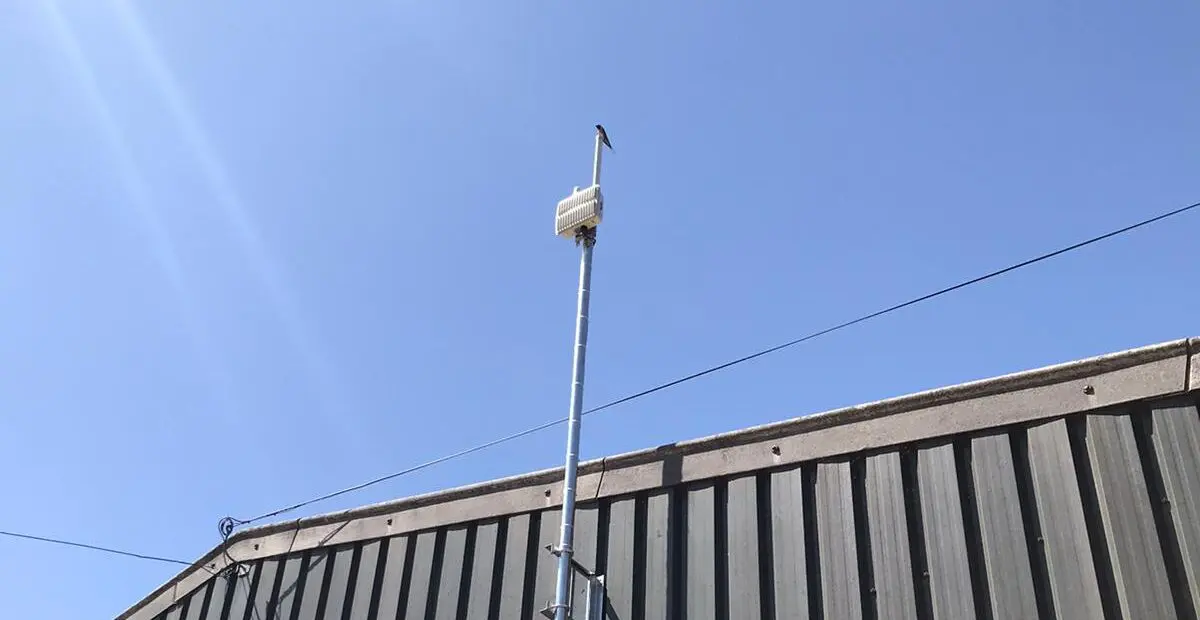
3. Gateway Forwards Data: The gateway (a bi-directional device that is a bridge between physical LoRa radio and the network server) forwards collected data via an internet connection to and from a cloud-based network server. Large deployments benefit from using multiple gateways to protect network uptime and availability.
4. Data Becomes Actionable: Information displays on dashboards where you can view real-time conditions, receive alerts, and trigger automated responses.
Key advantages of LoRaWAN connectivity
- Long-range: Signals reach up to 10 kilometres in rural areas, 3-5km in built-up environments, far beyond WiFi’s typical 50-100 metre range
- Ultra-low power: Sensors operate for 3 to 8 years on a small battery, making them practical for locations that are difficult or expensive to access regularly
- Cost-effective: lower ongoing fees, in particular for projects involving a high number of assets to connect to.
- Scalable: Easy to add more sensors to your network as needs grow.
- Real-time insights: Immediate visibility into conditions enables timely decision-making and proactive responses to issues like leaks, equipment failures, or energy waste
- Secure: Data is encrypted, protecting your operational information from unauthorised access
Why is LoRaWAN connectivity perfect for dispersed assets?
LoRaWAN excels when you need to monitor assets spread across large sites or multiple locations. A single gateway can cover many kilometres, connecting hundreds of devices. This makes it economically viable to monitor holiday lodges across a 50-acre site, sensors across multiple farms, or water meters throughout council infrastructure.
Some common applications
Agriculture: Tracking soil moisture and weather conditions, monitoring irrigation systems, livestock monitoring, and equipment tracking across farms where cellular coverage is often limited or non-existent.
Environmental Monitoring: Measuring water or air quality, wildlife monitoring, and other environmental data collection where cabling is usually not possible.
Leisure & Hospitality: Particularly beneficial for holiday parks, resorts, and hotel groups with accommodation spread across large sites or multiple locations, monitoring energy consumption, controlling heating and hot water systems remotely, tracking equipment performance, and detecting water leaks without staff needing to visit each property.
Water & Energy Utilities: Smart water metering across entire districts, monitoring renewable energy systems (ground source heat pumps, solar installations), leak detection in water networks, and tracking building energy performance for Net Zero compliance.
The LoRaWAN business case
When organisations evaluate LoRaWAN, three factors typically drive the decision:
Cost Recovery: Eliminating manual site visits saves substantial time and travel costs. The return on investment depends on your specific situation: number of sites, visit frequency, and travel distances, but organisations typically see rapid payback when LoRaWAN replaces regular manual monitoring rounds.
Energy and Resource Savings: Detailed monitoring identifies waste and enables targeted improvements. Specific savings depend on your application and existing inefficiencies, but visibility consistently reveals opportunities that were previously invisible.
Total Cost of Ownership: LoRaWAN offers significantly lower ongoing costs versus competing technologies, minimal infrastructure requirements, extended battery life (reducing maintenance visits), and scalable architecture, the economics are particularly attractive for large-scale deployments with many sensors.
What successful implementation of LoRaWAN connectivity looks like
Effective deployment requires more than just installing sensors. The best implementations combine technical expertise with strategic understanding of your sector’s challenges.
Key considerations include identifying which parameters truly matter for your operations, determining optimal gateway placement for coverage, selecting appropriate sensors for your environments, and designing dashboards that deliver actionable insights.
skentel Group Ltd has been at the forefront of LoRaWAN deployment in the UK, adopting the technology early and building deep expertise through real-world implementations across diverse sectors. As an experienced LoRaWAN Network Operator, we understand both the technology and the practical challenges of making it work in demanding environments.
We deliver complete integrated solutions, not just sensor installations. Whether you’re managing holiday parks, monitoring agricultural land, or overseeing renewable energy systems for utilities and local authorities, we have solved similar connectivity challenges.
If you are considering LoRaWAN, we can help you determine whether it’s the right solution, design a network that provides the coverage you need, and deliver a system that transforms data into operational improvements.
About skentel
About skentel: Specialists in secure, reliable remote connectivity and monitoring solutions that help organisations reduce waste and meet sustainability goals, by eliminating the need to travel to assets.
With expertise spanning LoRaWAN, cellular, and satellite connectivity, as well as hardware, cloud platforms, and data visualisation, we enable businesses to stay connected to critical assets across a variety of sectors, with expertise in very remote locations.